
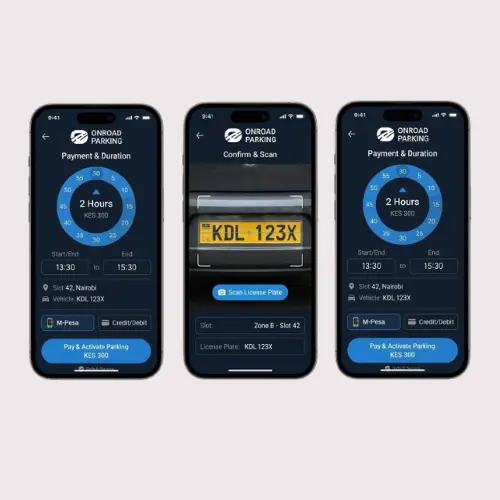
OnRoad Parking Application
$1,259,000.00
STRATEGIC LOCATIONS
Prime parking spaces in key urban areas.
SMART & DIGITAL
Advanced technology for seamless parking.
SECURE & RELIABLE
Your vehicle’s safety is our priority.
24/7 ACCESS
Park anytime, anywhere with ease.
GOVERNMENT PARTNER
Proud partners in building smarter cities.
Comprehensive National Deployment & Implementation Strategy
1. Executive Overview
OnRoad Parking is Africa’s leading provider of smart parking solutions to municipal and national governments. This deployment document outlines the turnkey roadmap, technical infrastructure architecture, and complete financial investment rate for rolling out a modernized, digitally enabled parking ecosystem across 5,000 urban parking bays in a target country.
Key Objective: Transform urban mobility, eliminate congestion, optimize municipal revenue collection,
and deliver a seamless, contactless driver experience through robust IoT infrastructure and centralized
SaaS management.
2. Core Platform Components
The OnRoad Parking deployment framework is built upon four fully integrated pillars designed for high
reliability, scalability, and 24/7 uptime: Smart IoT Sensors & Gateways: High-durability geomagnetic and radar parking bay sensors providing real-time occupancy data backed by wide-area LoRaWAN base stations.
Automated Enforcement (ANPR): Fixed and mobile Automated Number Plate Recognition cameras ensuring frictionless compliance monitoring and electronic ticketing. Digital Payment Middleware: Fully integrated payment gateway supporting mobile money wallets, national payment switches, credit/debit cards, and contactless NFC tags. Government Municipal Portal: Comprehensive administrative dashboard providing real-time analytics, dynamic pricing control, auditing tools, and enforcement officer dispatching.
3. National Deployment Cost Rate Model
The estimated investment rate for a full-scale national rollout covering 5,000 active parking spaces is detailed
below. Costs encompass software licensing, IoT hardware procurement, professional field installation, training, and first-year operational support.
4. Implementation Timeline & Phased Rollout
The deployment is executed over a structured 24-week timeline to ensure zero disruption to existing municipal workflows and immediate validation of system performance.
- Phase 1 (Weeks 1–6): Stakeholder alignment, regulatory compliance mapping, cloud tenant provisioning, and mobile application white-labeling.
- Phase 2 (Weeks 7–14): Pilot deployment across 500 primary bays, IoT sensor calibration, LoRaWAN network optimization, and payment gateway sandbox testing.
- Phase 3 (Weeks 15–22): Full-scale national hardware installation, municipal enforcement
training, and integration with national traffic databases. - Phase 4 (Weeks 23–24): Public launch campaign, app store release, go-live monitoring,
and handover to municipal operations teams.
5. Economic Return & Revenue Sharing Model
The platform introduces transparent digital enforcement and automated fee collection, effectively eliminating
cash leakages. Municipalities typically experience a 300% increase in parking revenue collection efficiency within the first 6 months of operation.
Financial Sustainability Formula: Net Revenue = Gross Collections − (SaaS Hosting + Maintenance +
Revenue Share Split). The model easily covers capital expenditure within 12–18 months through
optimized turnover and penalty enforcement.
Related products
-
Aiaas
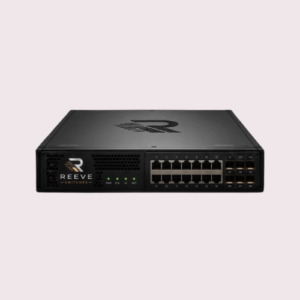
Reeve Switches
Price range: $1,250.00 through $3,450.00 Select options This product has multiple variants. The options may be chosen on the product page -
Aiaas
MUSIBUY
Price range: $0.00 through $99.00 Select options This product has multiple variants. The options may be chosen on the product page



Reviews
There are no reviews yet.